SDA and SIL: how do they work together at Melba?
Your home should always be welcoming, comfortable and just right for you, not only in how it looks and feels, but in how it supports your daily life.
That’s why our Specialist Disability Accommodation (SDA) and Supported Independent Living (SIL) work together to ensure your home is designed around your needs, with personalised support to live confidently within it.
Why have SIL with SDA?
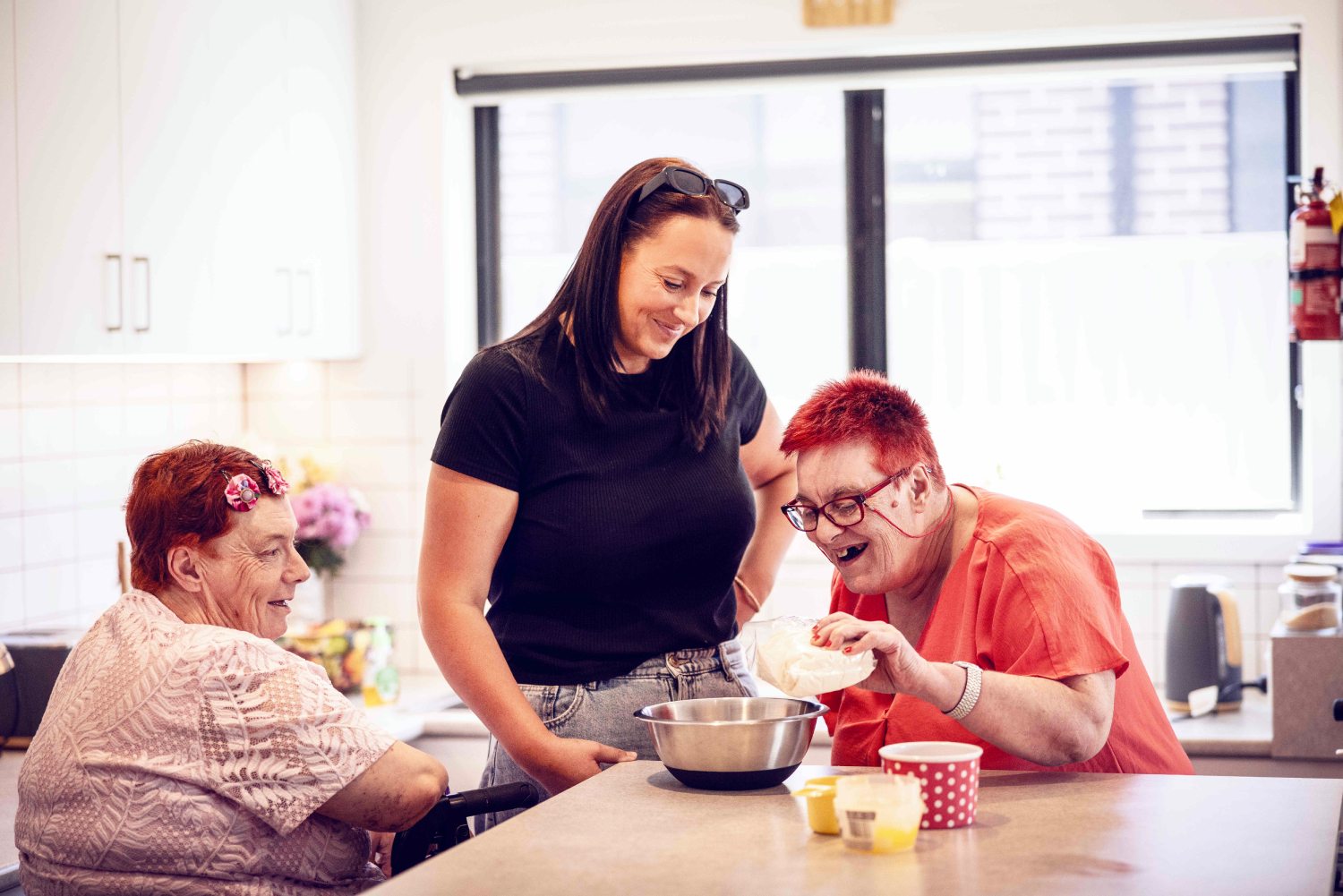
It’s not just finding the right SDA; it’s how you live in it that makes it truly feel like home. With SIL, you get daily support to live as independently as possible with things like personal care, cooking, building skills, and getting involved in your community.
How we work with developers and housing providers
Finding the right home isn’t just about what’s available, it’s about getting the best setup for you. That’s why we work closely with SDA developers and housing providers to connect you with options that meet your needs and lifestyle.
This includes:
- understanding the design and accessibility features of each property
- considering location; what’s nearby, what matters to you
- looking at who else might live there (if it’s shared living)
- making sure where you live supports the type of SIL you need
We take the time to explore options with you, explain what’s possible, and advocate for outcomes that feel right, both now and into the future.
What to look for in an SDA + SIL home
Choosing a home is a big decision, and something you have a say in. Here are a few things Melba helps you consider while exploring your options:
Does the home suit your needs?
Think about accessibility, layout, and whether the space feels comfortable for you day to day.
Does it feel like a good fit?
This includes the setting, the people you’ll be living with, and the overall feel of the home.
Is the support tailored to you?
Your support should reflect your routine, preferences and what matters most to you, not a one size fits all approach.
As your needs or lifestyle change, your home and support should be able to adapt with you.
At Melba, we guide you through each of these considerations at your pace, so you can make confident and informed decisions.
What’s the process with Melba?
When you’re trying to get the right support, there’s a bit to navigate, and we know this can be overwhelming at times. That’s why our supportive, stepped approach make things simple and manageable.
Here’s what it typically looks like:
We start by getting to know you and understanding what you want your home and support to look like. This comes down to your routine, preferences, goals, and what’s important to you.
2. Exploring your options
Based on your funding and needs, we work with you to explore suitable SDA options and talk through what each option might look like in real life.
3. Finding the right match
If you’re considering shared living, we take care to match you with housemates who are a good fit, considering routines, personalities and shared preferences.
We work with you to design your SIL supports so they feel personalised, flexible and aligned to your daily life.
5. Moving in and settling in
We support you through the transition, making sure you feel comfortable, supported and confident in your new home.
6. Ongoing support and adjustments
As things change, we stay connected, adjusting your supports if needed so they continue to work for you.
Bringing it all together
SDA and SIL are closely connected, and it’s how they’re brought together that really shapes your experience. At Melba, our focus is simple:
Because when your environment and your support work hand in hand, it creates something more than just a place to live. It creates a home where you feel happy, comfortable and able to live life your way.