





New Barbie breaking down barriers
January 16, 2026
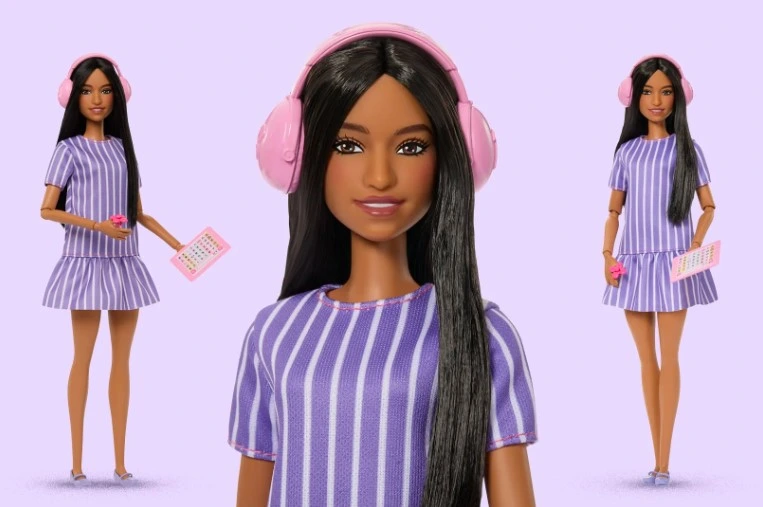
Mattel this week unveiled its first Barbie doll with autism, offering a welcome level of representation for children with autism and their families.
The doll was co-designed with the Autistic Self Advocacy Network to reflect some of the ways people with autism may experience, process and communicate with the world.
The process is important because it recognises that representation is most meaningful when shaped by lived experience and that autism is not a single experience, but a spectrum.
Many of the design details reflect common experiences of people with autism – for example the doll’s eyes are angled slightly to one side, acknowledging that some people with autism avoid direct eye contact. Fully bendable elbows and wrists allow for repetitive movements such as stimming or hand flapping, which can support sensory regulation or express excitement.
The doll also includes practical supports familiar to many people with autism, including noise-cancelling headphones to reduce sensory overload, a fidget spinner to help manage stress, and a tablet displaying augmentative and alternative communication supports.
Barbie also wears loose fitting clothing that minimises skin contact with fabric, paired with flat shoes for comfort and stability.
While Barbie has existed since 1959, dolls representing disability have only been introduced in recent years. Since 2019, the range has expanded to include dolls who are blind, use wheelchairs, have Down syndrome, prosthetic limbs and hearing aids, reflecting a growing recognition of diversity in everyday life.
Announcing the latest Barbie, Mattel’s Jamie Cygielman said the doll “helps to expand what inclusion looks like in the toy aisle and beyond because every child deserves to see themselves in Barbie”.
Hayley Dean, Melba CEO, said the new Barbie would help children with autism “feel truly seen” and would also challenge perceptions that autism was more represented in males.
“It means so much for children with autism – girls in particular – to see joyful and genuine versions of themselves in the world, and this new Barbie may help people feel truly seen,” she said.
“Nothing about me, without me is more than just a phrase, it’s what co-design is all about. This new doll is truly reflective of that, people with lived experience have been actively involved in designing this new Barbie. We know this won’t capture everyone’s exact experience, it never could. Every person is unique and so is their experience of neurodivergence. What is important is that some of the common experiences across the spectrum of neurodiversity are displayed and children will see themselves reflected in that.
“I can imagine the excitement of a child recognising their own experiences in things like headphones or a communication device – it’s a simple thing that can make a big difference.
“This is a wonderful step toward breaking down stigma and showing that people with autism of every gender, background and age belong.”
The launch highlights the growing importance of visibility and authenticity in children’s toys, offering more children the chance to see themselves reflected in the stories and play experiences that shape early understanding of the world.


